Lesson Three
helping verbs
Advice from your teacher: Take notes   in your notebook in your notebook
Helping verbs are used before main verbs when making questions, negatives, and when changing the mode of a verb.
There are twenty-three helping verbs that students should learn when they study English. These helping verbs are grouped within four main categories:
The verb "be" – be, am, is, are, was, were, been, being
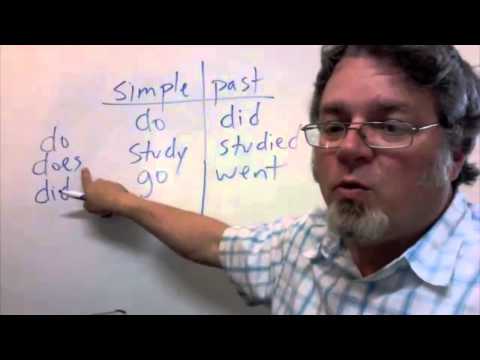
The verb "do" – do, does, did,
The verb "have" – have, has, had
modal verbs – can, could, will, would, may, might, must, shall, should
| be |
|
Use the verb "be" as a helping verb when forming continuous tenses and the passive voice:
the present continuous tense:
- She is studying English. (main verb: study)
- We are going for a walk. (main verb: go)
the past continuous tense:
- Who were you talking to? (main verb: talk)
- Sharon was sitting all by herself. (main verb: sit)
the passive voice:
- She is helped by the teacher. (main verb: help)
- Tests are being done on the water. (main verb: do)

|
| do |
|
Use the verb "do" as a helping verb when forming negatives and questions in the present tense and the past tense:
present tense negatives:
- She doesn’t study English.
- The children don’t have shoes.
present tense questions:
- Does Maria study French?
- Where do they like to eat?
past tense negatives:
- He didn’t eat his breakfast.
- The project did not take long to complete.
past tense questions:
- What did you do with my shoes?
- Did the bus leave already?
Now try this exercise.
|
| have |
|
Use the helping verb "have" when forming perfect tenses:
the present perfect tense:
- I have finally learned how play those chords.
- Kevin hasn’t eaten all of his breakfast yet.
the past perfect tense:
- They had never seen such a large fish
- It they‘d had more time, they would have remained.
with modal verbs that express the past:
- You should have helped her.
- That would have been great.
the present perfect continuous tense:
- Those children shouldn’t have been playing in that area.
- Vanessa might have been working late last night.

|
| modal verbs |
|
When a verb follows a modal verb, it’s in the simple form. Modal verbs change the meaning of the main verb.
- You should read more. (recommendation)
- They can read in English. (ability)
- She might read her book. (possibility)
- I must read the assignment. (necessity)
- He will read the newspaper. (future)
The subject of modal verbs is also explained in Yellow Level Lesson Ten.
|
Next: Lesson Four
|

